
A scientific study
An Early Bronze Age IV Oil Lamp from the Near East
Lighting is something that we certainly take for granted today. We turn on a switch and voilà, we have light! If we want add to the atmosphere of a dinner party, we light candles for ambiance.
And all these are because of today’s technology and invention in the field of electronic and related fields, but in the ancient world, it was quite different. No switches, no electricity running through the walls of every domus. During time as the nature of everything change the way of lamps were made and the energy was used for lighting also change The Romans, and the Greeks before them, used oil lamps.
Similar to the today’s market the ancient market of lamps were various in the point of view of quality and the amount of ornamentation upon a lamp.
Oil lamps made out of bronze or pottery were in use in the Mediterranean world from about the seventh century B.C., and continued as such for centuries. Most consisted of a chamber for the oil, a filling hole in the middle, and another hole in the nozzle for a linen wick. Some lamps even had a handle for ease of carrying.
The skills of providing lamps were quiet interesting as well the majority of oil lamps were constructed in two-piece gypsum (calcium sulphate) and plaster moulds. When the lamp was taken out of the mould, it was dipped in a slip of clay (a thick liquid clay mixture) to coat it even more and make it oil-resistant.
And the material and size of lamps which was used for preparing the Ancient oil lamps come in many sizes and shapes and are made from different materials. Typical materials are terra cotta, bronze, silver, ceramics, etc.
THE EB IV OIL LAMP (2300-2000B.C.E.)
TYPOLOGY:
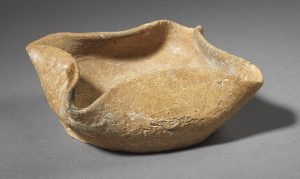
Not until the latter part of the Early Bronze Age do we see bowls made more suited to their nightly task as oil lamps. The bases of the bowl were now flattened to provide greater stability to be based easily and stable. The rim was folded over in four equally spaced areas to provide enough lighting all around the four sides of the lamp. In these lamps the quality and size varied from those that had thin walls and almost perfectly formed pinched nozzles.
The Amorites, the peoples originating from the north in Mesopotamia, I deduce, introduced the original design to the inhabitants of Canaan. The style of the lamp was then copied and produced locally. “Lamps with four spouts; are one of the hallmarks of the period”. The four-spout design evolved as a direct response to the type of fuel used in the container. This particular style of lamp burned fish oil and or animal oil, an inferior type fuel, in reply to the scarcity of olive oil, which is a very efficient burning fuel. The four wicks were necessary to provide an adequate light source.
The Early Bronze Age IV3 lamp studied
The example of ancient lamp from the early bronze age highlight the rim’s careful folding, which contained four wicks The great workmanship of the potter may be seen in the thin walls of the bowls in this specimens. The dimensions of this particular design of oil lamp typically ranged from 9 to 15 cm square and 2.5 to 12 cm high. Based on my observations of actual gathered and examined artefacts, we have concluded that the majority of the lamps are on the smaller scale, measuring 9 to 12 cm square and 2.5 to 8 cm height.4
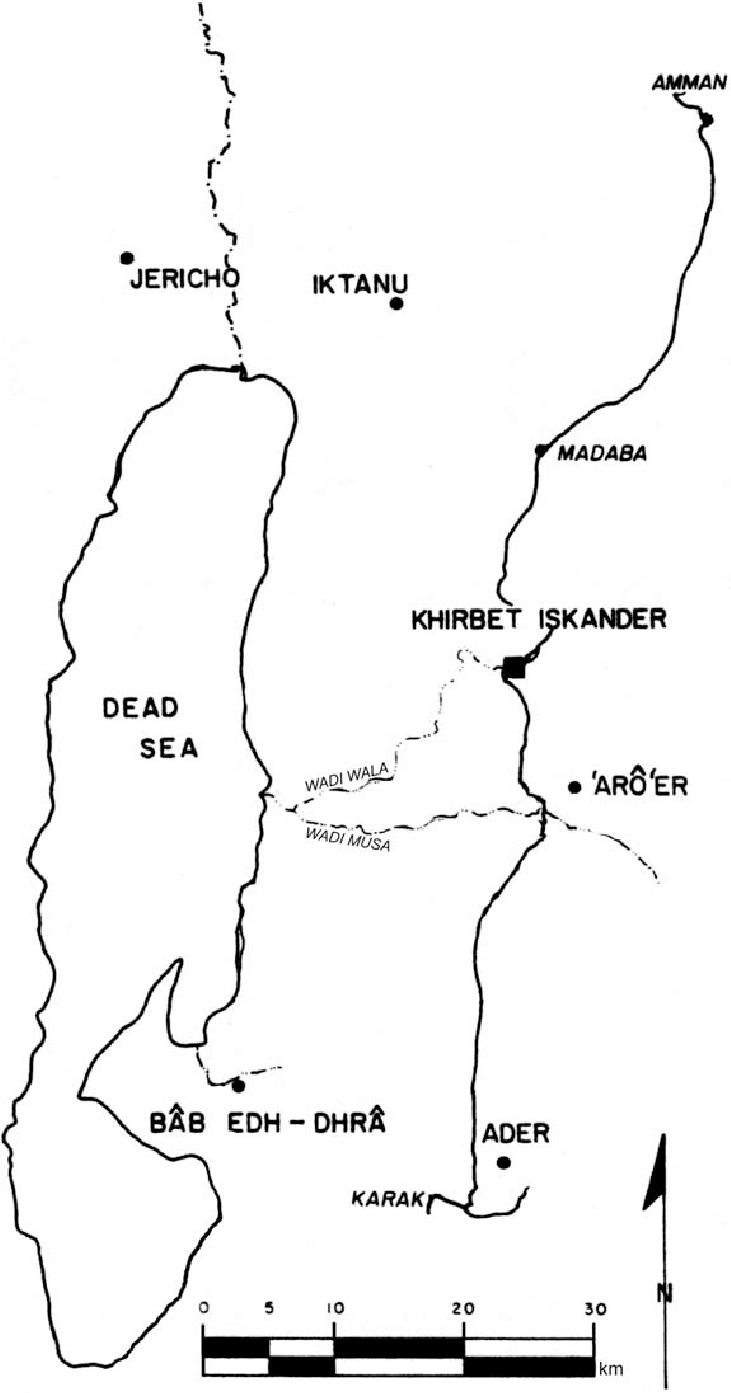
Khirbet Iskander often called the most important site in the EB IV period. It appears to be a town (7-acre site) that continued to survive after most of the cities/towns disappeared at the end of EB III. One of the trademarks of an EB centre is usually its fortifications and in the EB IV Khirbet Iskander had such fortifications.
They were rebuilt defences of the EB II-III period, but still unique as the only EB IV fortifications known thus far in the southern Levant. There is also a gateway as well as a public building that included many of the objects found and now displayed in Erie Art Museum as part of the Khirbet Iskander dig.5
The specific example below has a very unique high bowl profile with thick walls. Note the traces of carbon black on the nozzles reflecting where the burning wicks were positioned. It has a very flat base, specifically designed not to tip over easily, due to its high centre of gravity.
Bibliography:
David Arthur Douglas, THE DEVELOPMENT AND DEMISE OF THE EARLY BRONZE AGE IV, NEAR EASTERN OIL LAMP, 2016
Dr. Suzanne Richard, Co-director of Khirbet Iskander Excavations, excavation remarks